
University of Washington · Taskar Center for Accessible Technology
Accessible technology built with communities, made to work in the real world.
The Taskar Center for Accessible Technology (TCAT) designs, develops, deploys, and helps sustain technologies that expand participation in everyday life.
Based at the University of Washington’s Paul G. Allen School of Computer Science & Engineering, we work with disabled people, community organizations, students, researchers, and public agencies. Our work connects inclusive design, open technology, and real-world use across mobility, artificial intelligence, work, and play.
What brings you here?
Find a tool, explore a research area, or connect with a community project.
I want to use accessible technology
Explore practical tools for routing, communication, play, and everyday access.
Find TCAT tools and projectsI work for an agency or organization
Learn how pedestrian data, accessible routing, and community evidence can support planning and services.
Explore transportation and agency applicationsI want to participate or contribute
Explore community mapping, adaptive technology, collaborative research, and volunteer opportunities.
Find ways to participate in TCAT projectsI need instructions or documentation
Find step-by-step guides for AccessMap, OS-CONNECT, TDEI, Walksheds, and contributing pedestrian information.
Search the TCAT Wiki and tutorialsI’m looking for research and methods
Find publications, recorded talks, technical approaches, and examples of research in use.
Browse TCAT publications and talksOur areas of work
Across our projects, people with disabilities contribute expertise that shapes what we build and how it works.
Mobility and transportation
Detailed pedestrian infrastructure, accessible navigation, connected transportation data, and evidence for decisions about access to destinations.
Explore mobility and transportationNon-Ableist AI
Research and technologies that address exclusion in artificial intelligence, value disability expertise, and support human agency and oversight.
Explore Non-Ableist AIWork and play
Assistive technology, accessible communication, adaptable interfaces, and inclusive recreation that expand opportunities for participation.
Explore work and playOur work in practice
Research becomes useful when communities and organizations can put it into practice. These examples connect TCAT’s methods to real applications.
Mapping pedestrian infrastructure
OS-CONNECT brings together statewide pedestrian data, review workflows, and tools that help Washington jurisdictions understand their sidewalk networks.
Explore Washington’s sidewalk data initiativeMaking accessible trips easier to plan
AccessMap supports pedestrian route planning with customizable mobility preferences, while TDEI helps connect transportation datasets across systems.
Explore AccessMap’s routing toolsDocumenting community access barriers
AVIV ScoutRoute helps organizations and community teams record observations about sidewalks, crossings, stops, and other elements of everyday journeys.
Explore ScoutRoute and community mappingFree community resource · TCAT + PROVAIL
Try assistive technology through the Pacific Northwest Adaptive Technology Library
Borrow adaptive equipment, explore what works for you, and try tools before making a purchase.
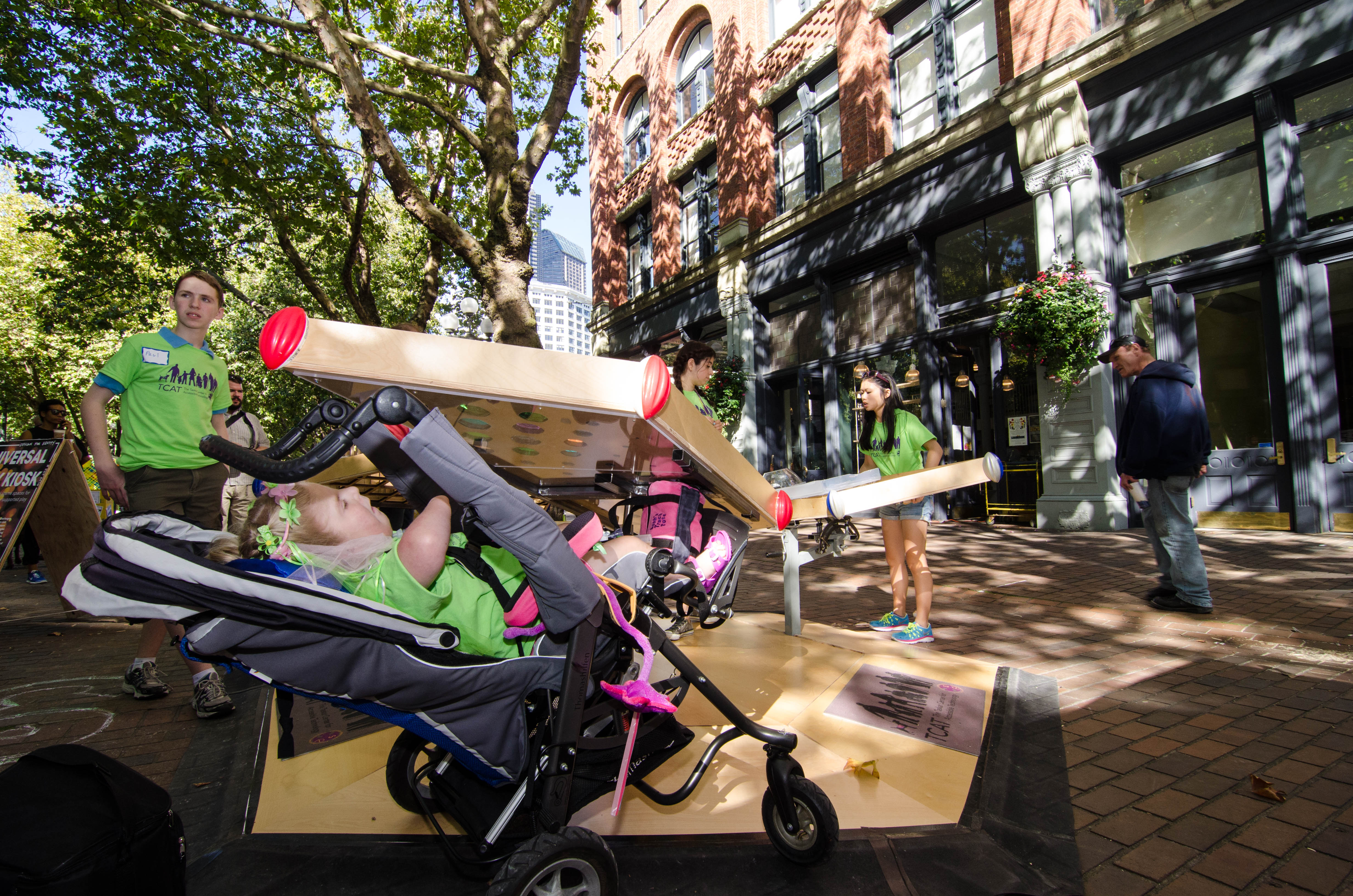
The Pacific Northwest Adaptive Technology Library is a free lending service developed through a partnership among TCAT and PROVAIL. Its catalog includes adapted toys, switches, communication aids, mounting equipment, and other tools supporting access to play, communication, and technology.
The public lending library is located at PROVAIL in North Seattle. Visit the library website for enrollment information, borrowing instructions, and current equipment availability. Educators and therapists may also borrow equipment on behalf of eligible students or clients.
Questions about borrowing? Email pnw-at-library@provail.org.
Explore tools, data, and research
Learn how our technologies work, where the underlying data comes from, and how projects can be adapted or reused.
Documentation and tutorials
TCAT Wiki: start here
Use plain-language entry points and detailed guides to view pedestrian data, plan with Walksheds, route with AccessMap, download data, and contribute corrections. The wiki also links to technical documentation and schemas.
Open the TCAT WikiProjects and technology
Browse applications, prototypes, mapping tools, and accessible technology projects.
View current TCAT projectsResearch and presentations
Read publications and find recordings that explain our methods, findings, and collaborations.
View research publications and recorded talksTransportation data exchange
Learn about shared transportation-data standards, interoperability, and technical resources.
Explore the Transportation Data Exchange InitiativeAccessible transportation resources
Find information on regional tools for accessible navigation, wayfinding, transit, and travel.
Browse regional accessibility resourcesEvents and learning opportunities
Meet our teams, share what you’re working on, and learn with other accessibility researchers, community members, students, and practitioners.
Upcoming events at TCAT
Find mapping meetups, community workshops, presentations, conferences, and other opportunities to participate. The calendar includes event dates and details.
Browse the TCAT events calendarOpen Pathways community
Connect with people and organizations improving data, technology, and decisions for nondrivers, including the OpenThePaths gathering and ongoing community exchange.
Find community events and participation opportunitiesEvent details and registration requirements vary. Follow the individual event page for accessibility and participation information, or contact TCAT if an accommodation is not described.
There are many ways to participate
Engagement can mean borrowing a tool, lending your lived experience, helping a team map accessibility, contributing to open technology, or developing a partnership.
Join a community project
Participate in mapping activities, advisory conversations, team challenges, and inclusive design and evaluation.
Explore community participationStudents and volunteers
Find opportunities for research, capstones, toy adaptation, hackathons, and hands-on accessible design.
Explore student and volunteer opportunitiesTry or borrow technology
Explore equipment available through the Pacific Northwest Adaptive Technology Library with PROVAIL and HuskyADAPT.
Browse the assistive technology lending catalogBring us a challenge
Community organizations, public agencies, and practitioners can discuss accessibility needs, deployment opportunities, and potential collaborations.
Email TCAT about a partnershipSupport accessible technology
Help accessible technologies reach more people
Financial gifts can help sustain TCAT’s research, student learning, community partnerships, and work bringing accessible tools into everyday use. You can also contribute time, expertise, and feedback through our projects.
Donations are processed through the University of Washington’s giving website. For information about other types of support or partnership, contact uwtcat@uw.edu.
Stay connected with TCAT
Hear about upcoming events, research, practical tools, community projects, and ways to take part. Or tell us what accessibility challenge you’re working on.
For accessibility accommodations, accessible formats, or help finding information on this website, email uwtcat@uw.edu.
TCAT is a research and translation center, working on open-source technology to develop, translate, and deploy accessible technologies, and then sustain them in the hands of communities. Housed by the Paul G. Allen School for Computer Science & Engineering, TCAT centers the experience of people with disabilities as a lens for improving design & engineering, through participatory design practices, tooling and capacity building.
Interested in working in any of our open source projects or looking for documentation?


Check out our upcoming events!
- 5:30 pm – 8:00 pm, November 12, 2026 – MaptimeSEA x TCAT Monthly Mapping Meetup
- 5:30 pm – 8:00 pm, January 14, 2027 – MaptimeSEA x TCAT Monthly Mapping Meetup
- 5:30 pm – 8:00 pm, February 11, 2027 – MaptimeSEA x TCAT Monthly Mapping Meetup
- 5:30 pm – 8:00 pm, March 11, 2027 – MaptimeSEA x TCAT Monthly Mapping Meetup
- 5:30 pm – 8:00 pm, April 8, 2027 – MaptimeSEA x TCAT Monthly Mapping Meetup